


Scale up your incident communication with StatusIQ hosted status pages

1. Integrate with your monitoring tools
Integrate seamlessly with Site24x7, Slack, Microsoft Teams, and PagerDuty. Automatically detect outages and update your status page to ensure real-time visibility.

2. Streamline incident management
Empower your DevOps and Support teams to manage incidents efficiently. Post updates from initial acknowledgment to postmortem, reducing support ticket volume.

3. Communicate instantly
Share status updates instantly. Enhance communication with a multilingual status page that supports over 50 languages, ensuring every user stays informed.
White paper
Are outages increasing the number of tickets to your service desk?
Are they also affecting your user satisfaction rates? Discover how status pages transform your incident communication, ensuring transparency and customer retention.

Frequently asked questions about hosted status pages
Why should I use a hosted status page instead of hosting it myself?
When your infrastructure goes down, your self-hosted status page might go down with it. A hosted status page resides on a separate, globally distributed infrastructure. This ensures that your communication hub remains operational even during a total blackout of your primary services.
How does a status page integrate with incident management?
A unified status page bridges the gap between monitoring and communication. It can trigger automatic updates from monitoring tools, log incidents, notify subscribers via SMS/email, and push alerts to incident management platforms like PagerDuty or Opsgenie. This creates an incident-driven response workflow that saves critical minutes during an outage.
Can I display the status of individual components?
Yes. StatusIQ allows you to provide component-level status updates. You can display the health of your API, web application, mobile app, and backend databases individually. This granularity prevents users from assuming your entire system is down when only a minor sub-system is experiencing issues.
Hear it from our customers
We switched to Site24x7 from UptimeRobot because they could not provide an API to subscribe emails automatically to alerts. The StatusIQ dashboard is also well-designed, and we embed it in our web portal to provide transparency to our customers. The product is also well-priced, and I could configure it easily. Your payment system is also world-class; this is not an understatement.

How Site24x7 StatusIQ hosted status pages help you

Public status page
Share real-time updates on your system's status through a dedicated public status page. Keep your customers and stakeholders informed about incidents and resolutions for enhanced transparency.

Private status page
Help employees stay updated during outages with private status pages, ensuring clear communication, quick action, and minimal disruptions. With instant notifications and a central hub for updates, teams can focus on resolving issues instead of searching for information.
Build a beautiful status page tailored to your business
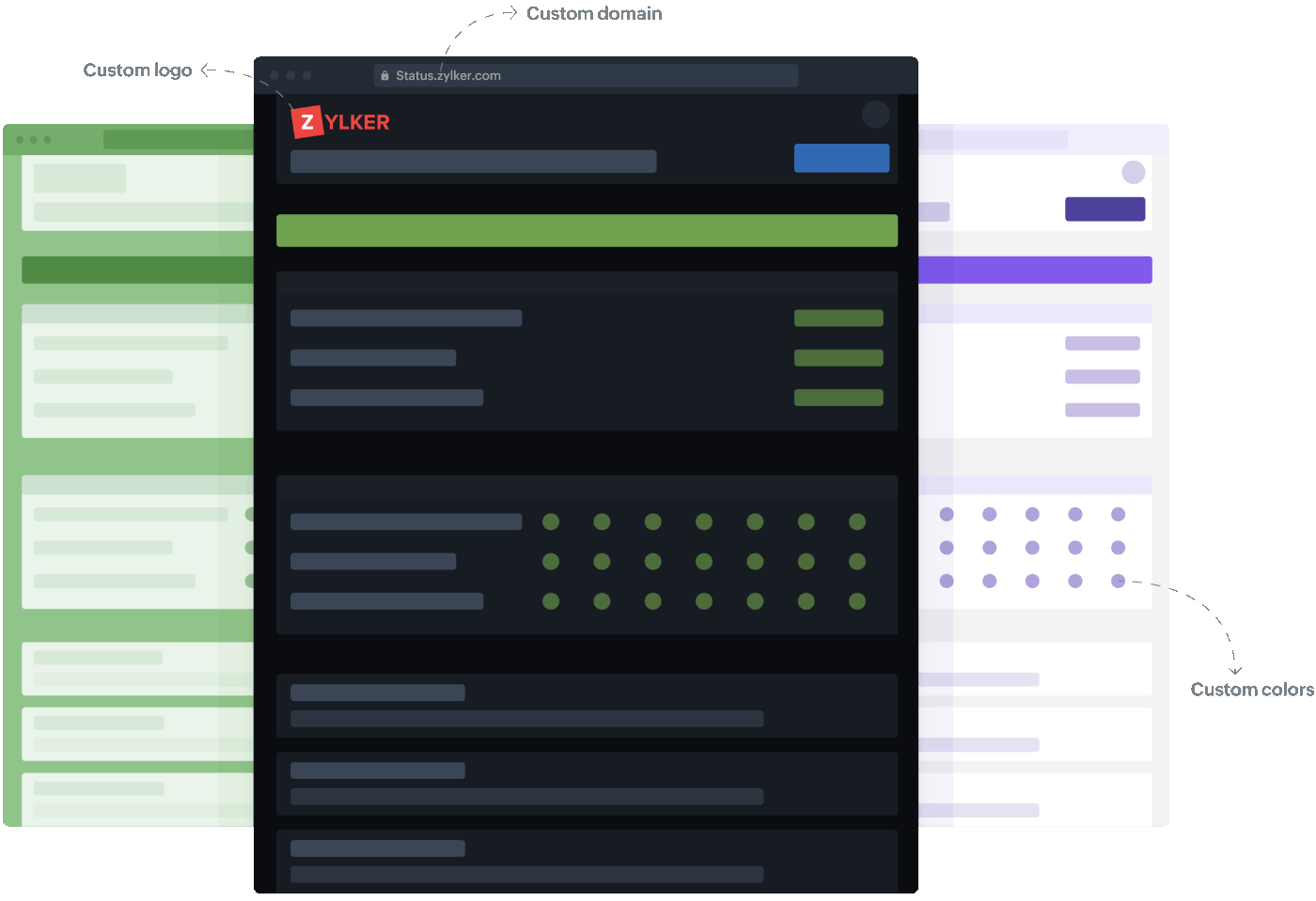
Showcase your brand's colors, logo, and favicon, and map custom domains like status.yourbusiness.com to the default address. Authorize StatusIQ to send notifications on behalf of your email domain to improve recognition with your customers.
Help your customers plan
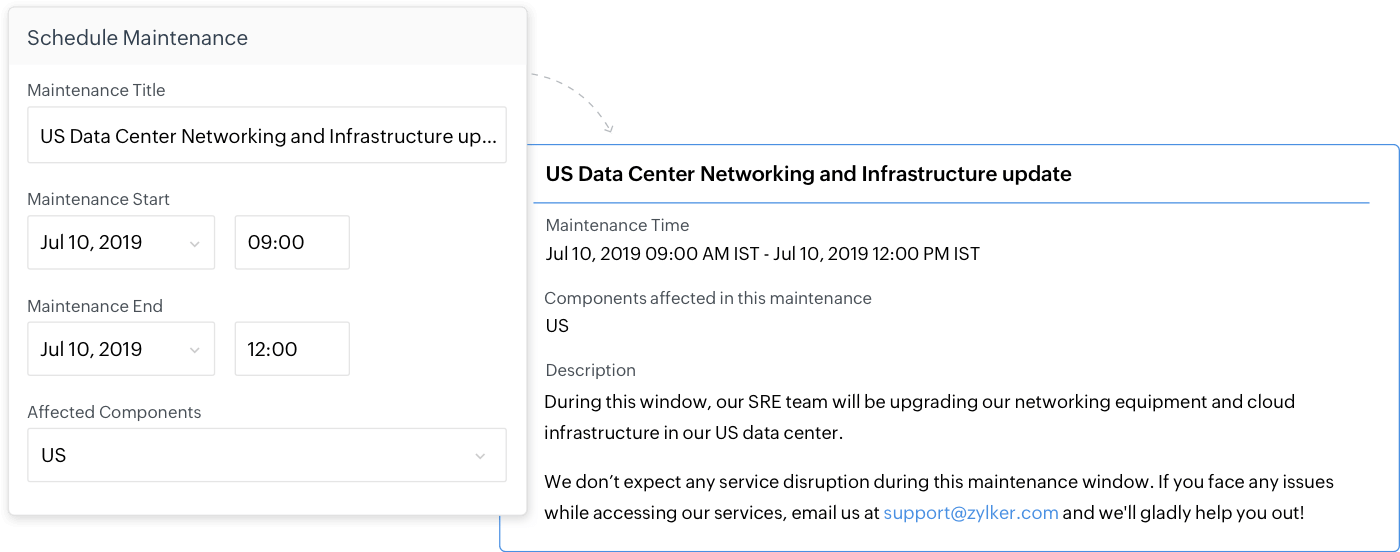
Inform your customers about upcoming maintenance events to help them prepare for any potential impact. With StatusIQ, you can create a one-time or recurring maintenance schedule that automatically updates the status page and sends email notifications.
Drive down ticket volume during outages
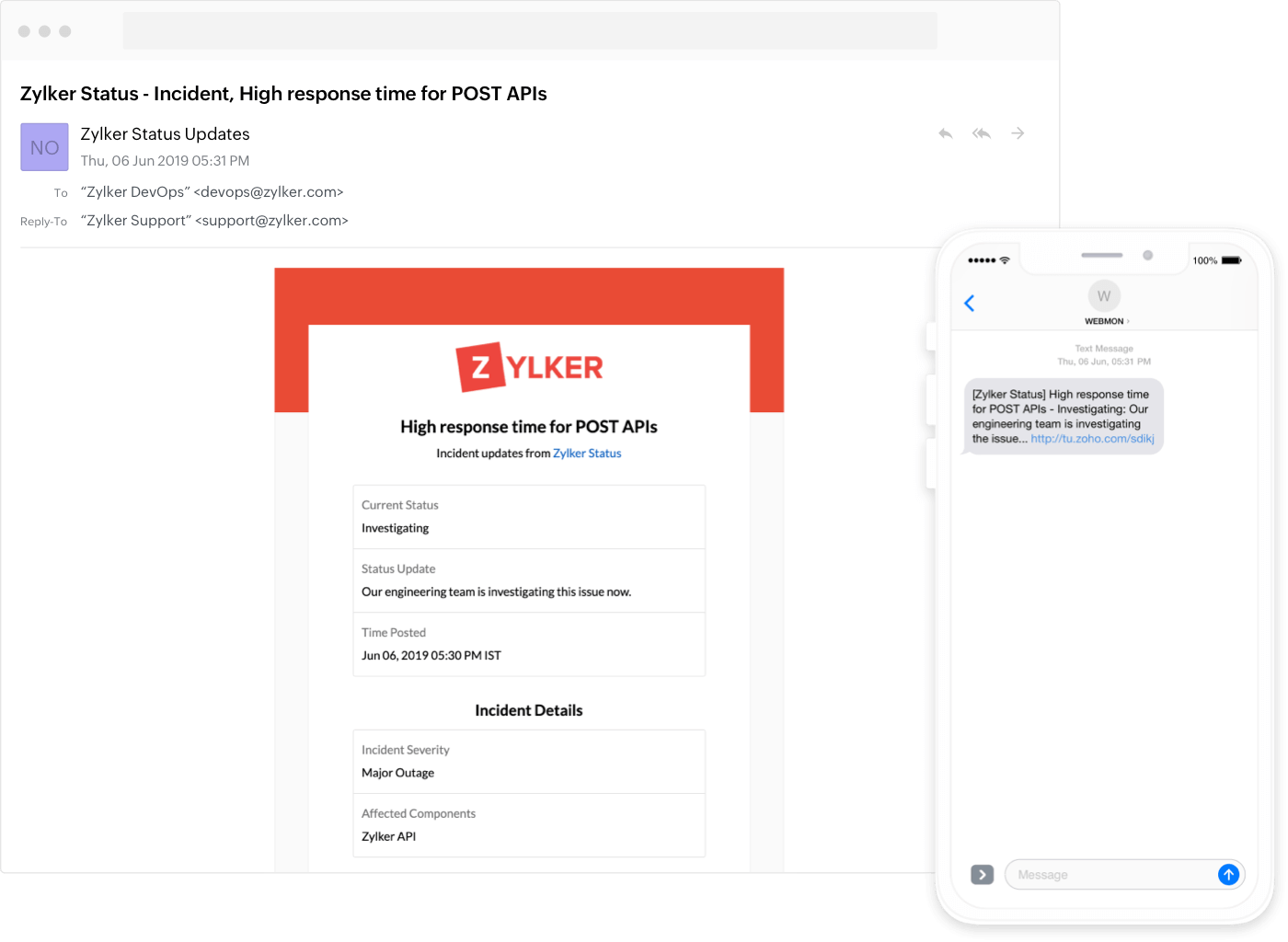
Customers don't want to visit your status page every time they're unable to access your service. Notify them via email or SMS, or enable to access updates via RSS. You can also help your end users avoid alert fatigue by allowing them to opt-in for notifications from the services they care about.
Enhance your customers' trust
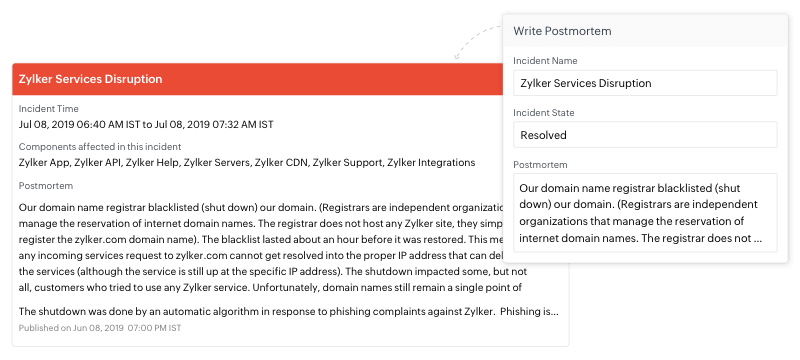
Customers need more details about the resolved incident. With postmortem, you can write the root cause of the incident, the fix implemented, and the steps taken to prevent incidents in the future. Using our text editor, you can format text, add tables, and links to emphasize key points.
Watch a quick overview
A 2-minute guide through the setup and layout.
Do even more with StatusIQ hosted status page
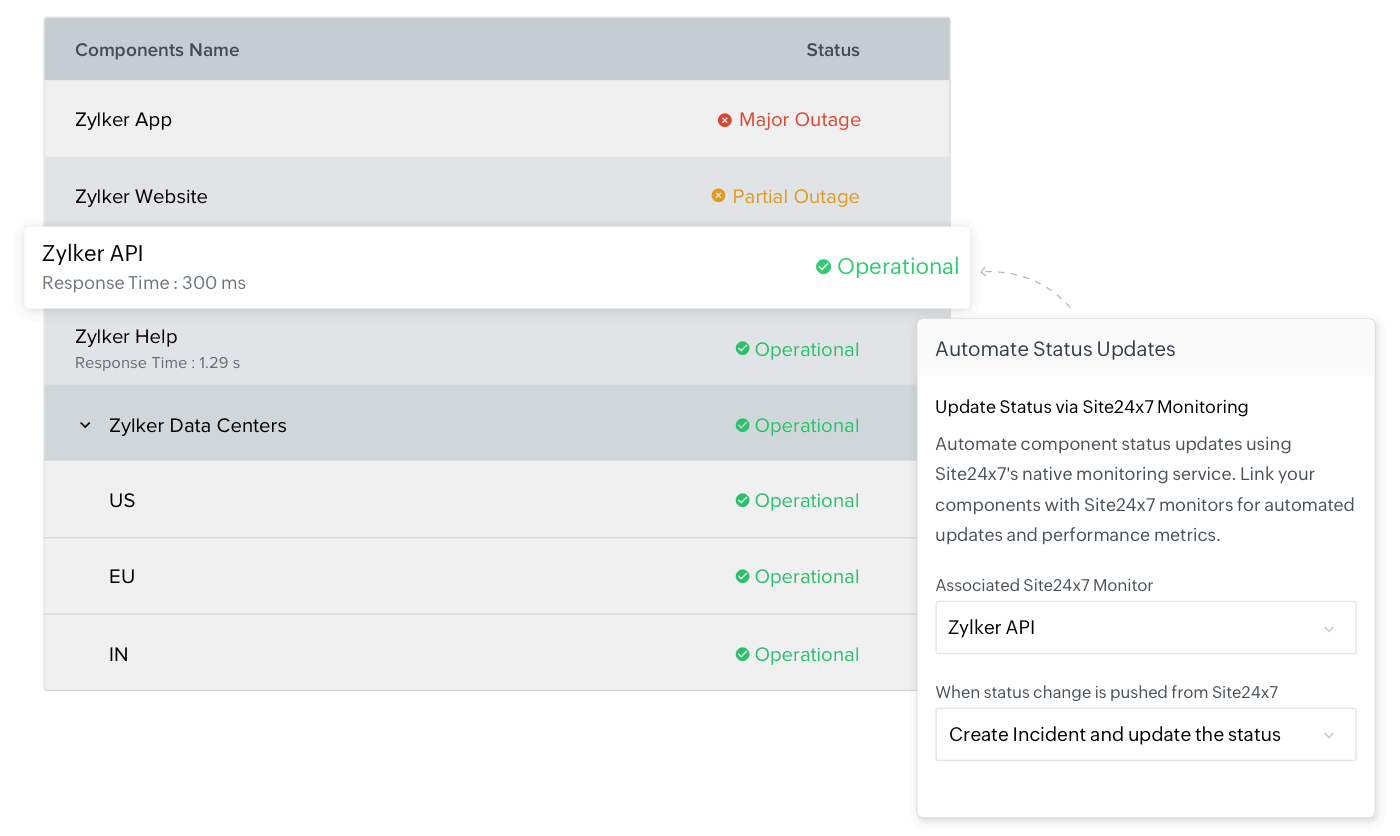
Simplify your toolset
Configure your status page components as monitors in the Site24x7 console to sync status and maintenance updates.
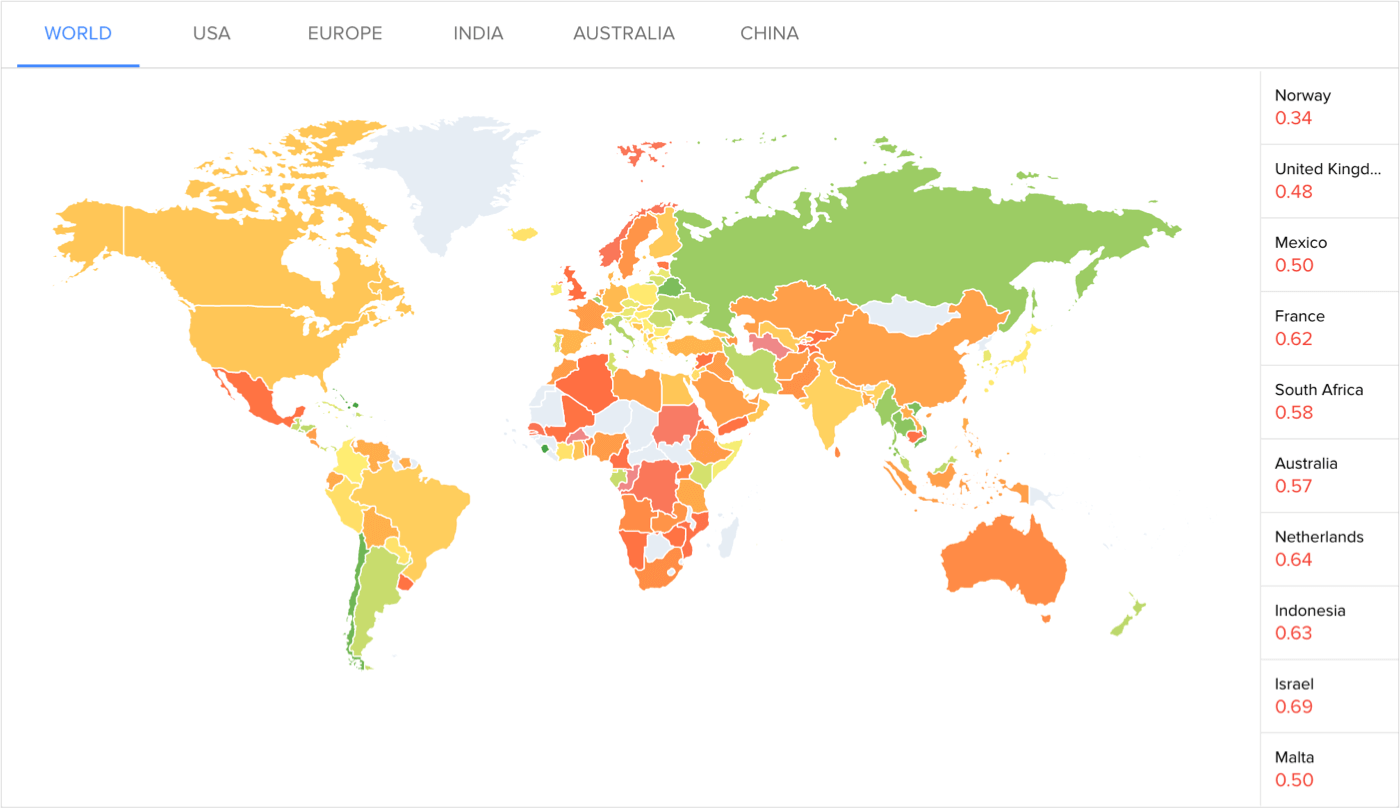
Showcase reliability with metrics
Add performance and end-user experience metric charts to provide more details about how your service is performing.
Communicate status updates in seconds, not minutes!
Update and share your status page in real-time with our mobile app, keeping your team instantly informed, even during outages or disruptions-all with just a few taps


Overview of status pages
What is a status page?
A status page is a webpage that displays real-time information about the status of a specific service, system, or product. It helps businesses or organizations to keep their customers or users informed about outages that affect their ability to access or use a service.
Besides providing real-time information, a status page builds customer trust by demonstrating transparency and a commitment to keeping them informed. Companies use status pages as part of their incident response and communication strategy to ensure customers are in the loop. Learn more
What are the types of status pages?
The two main types of status pages are public and private. Public status pages are designed to offer real-time updates on services for customers, fostering an environment of trust. Private status pages are designed for internal teams, promoting efficient communication and teamwork within a business. Both play a significant role in enhancing operations, building customer trust, and boosting overall productivity.
Why does a business need status pages?
A status page is essential for any business or organization as it enables them to:
- Keep customers informed.
- Minimize incidents' impact.
- Improve incident communication.
- Meet customer expectations.